Denna webbsida är endast avsedd för läkare och sjukvårdspersonal med förskrivningsrätt.

Johns Hopkins forskare utvecklar flytande biomarkör för upptäckt av degenerativa sjukdomar

Two progressively degenerative diseases, amyotrophic lateral sclerosis (ALS, commonly known as Lou Gehrig’s disease) and frontotemporal dementia (FTD, recently in the news with the diagnoses of actor Bruce Willis and talk show host Wendy Williams), are linked by more than the fact that they both damage nerve cells critical to normal functioning — the former affecting nerves in the brain and spinal cord leading to loss of movement, the latter eroding the brain regions controlling personality, behavior and language.
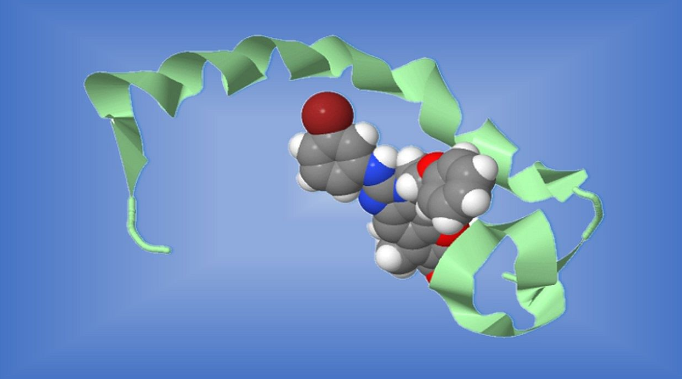
A Johns Hopkins Medicine-led team has developed a fluid biomarker that may one day detect two degenerative diseases, ALS and FTD, before symptoms appear. The biomarker locates a protein associated with the loss of function for the TDP-43 protein (seen as a molecular model in this image), an abnormality linked to people who develop ALS or FTD.
Credit: Public domain image via Protopedia.org

Research studies have repeatedly shown that in patients with ALS or FTD, the function of TAR DNA-binding protein 43, more commonly called TDP-43, becomes corrupted. When this happens, pieces of the genetic material called ribonucleic acid (RNA) can no longer be properly spliced together to form the coded instructions needed to direct the manufacture of other proteins required for healthy nerve growth and function. The RNA strands become riddled with erroneous code sequences called “cryptic exons” that instead affect proteins believed to be associated with increased risk for ALS and FTD development.

Until now, it was unknown if this abnormality occurred early or late in the clinical courses of ALS and FTD. In a study in the February 2024 issue of the journal Nature Medicine (first posted online Jan. 25, 2024), Johns Hopkins Medicine researchers tell how they answered that long-pondered question.

“We developed a method for locating a specific cryptic exon-linked protein, hepatoma-derived growth factor-like 2 [HDGFL2], that is associated with the loss of TDP-43’s function,” says senior study author Philip Wong, Ph.D., professor of pathology and neuroscience at the Johns Hopkins University School of Medicine. “By doing so, we believe we’ve discovered a biomarker that could potentially be used to detect ALS and FTD in their earliest stages — even before symptoms appear.”

The hunt for the biomarker began with the researchers first identifying cryptic exon-linked proteins associated with TDP-43 function loss. Then, using fragments from those proteins known as cryptic peptides, they created monoclonal (laboratory-made) antibodies specific to each one. Placed into patient samples of blood or cerebrospinal fluid (the protective fluid that surrounds the brain and central nervous system), the monoclonal antibodies will seek and lock onto only the cryptic peptides for which they were designed, making those proteins detectable.

“Of all the cryptic peptides for which we made monoclonal antibodies, the one that worked best was the one designed for the cryptic HDGFL2 protein,” says study lead author Katie Irwin, an M.D./Ph.D. student at the Johns Hopkins University School of Medicine. “We used that monoclonal antibody to develop an extremely sensitive detection test for the cryptic HDGFL2 protein in body fluids.”

After validating their detection method in the lab, the researchers used it to test blood and cerebrospinal fluid samples from three different collections, encompassing people with the most common forms of familial (genetic) ALS and FTD linked to a mutation in the C9orf72 gene, sporadic (not defined as genetic) forms of ALS and FTD, and healthy controls. The collections also contained biofluid samples from patients with ALS and FTD prior to their diagnoses, meaning that the researchers could look for cryptic HDGFL2 at both presymptomatic and symptomatic stages of the diseases.

“Our test found cryptic HDGFL2 in the presymptomatic stages of patients who were genetically predisposed to ALS and FTD, and were expected to go on to develop the diseases, giving the method credibility as a potential preclinical biomarker for predicting risk of ALS and FTD,” says Irwin. “And we discovered that the test also could detect elevated levels of cryptic HDGFL2 in fluids from people with sporadic disease cases where no family history of ALS or FTD was known.”

Wong says that having a biomarker capable of detecting cryptic HDGFL2 in the biofluids of presymptomatic patients enables them to compare its findings to results using an established biomarker for ALS and FTD.

“The current biomarker for ALS and FTD looks for structural components of central nervous system [brain and spinal cord] nerves called neurofilaments that are shed into the biofluids, but only after symptoms begin appearing,” explains Wong. “If we use it and our cryptic HDGFL2 biomarker to determine both presymptomatic and symptomatic ALS and FTD, we can map the course of these diseases and obtain greater insight into each of their stages.”

Wong says that knowledge could help steer patients into clinical trials for new ALS and FTD therapies earlier and “at a time when it might truly make a difference.”

Irwin says she and her colleagues are gathering biofluid samples from around the world from patients with FTD, genetic ALS and sporadic ALS.

“We hope to support the effectiveness, reliability and sensitivity of our biomarker by testing it on thousands of patient samples, and once validated, encourage its use as a clinical tool,” she says. “We also plan to explore the use of our biomarker for determining the effectiveness of therapies in preclinical ALS and FTD by looking for reductions in cryptic HDGFL2 levels — and restoration of TDP-43 function — after treatment.”

Along with Wong and Irwin, the members of the study team from Johns Hopkins Medicine are Kyra Bowden, Kerstin Braunstein, Koping Chang, Pei Jasin, Jonathan Ling, Abhay Moghekar, Esther Oh, Irika Sinha, Bryan Traynor and Juan Troncoso. Other team members are Dan Bartlett and Denitza Raitcheva from Biogen, James Berry and Mark Garret from Massachusetts General Hospital, and Timothy Miller from the Washington University School of Medicine in St. Louis.

Funding for the study came from National Institutes of Health grants R01NS095969, UH3NS115608 and R33NS115161; the Robert Packard Center for ALS Research at Johns Hopkins; the Target ALS Foundation; ALS Finding a Cure; the ALS Association; U.S. Food and Drug Administration grant 1U01FD008129; the Alzheimer’s Association; the Institute for Data-Intensive Engineering and Science; the Intramural Research Program of NIH (National Institute on Aging/National Institute on Neurological Disorders and Stroke grant 1ZIAAG000933); and the Karen Toffler Charitable Trust.

Ling and Wong are inventors on a provisional patent application submitted by The Johns Hopkins University that covers the use of TDP-43-associated cryptic exon-derived neoepitopes as biomarkers. Traynor holds patents on the clinical testing and therapeutic intervention for the hexanucleotide repeat expansion of C9orf72. Bartlett is an employee and shareholder of Biogen. At the time of the study, Raitcheva was an employee and shareholder of Biogen.

The other study authors do not have financial or conflict-of-interest disclosures.

Ny forskning belyser hur hjärnan navigerar under samtal

Forskare har avslöjat nya insikter om hur hjärnan bearbetar tal och lyssnande under samtal genom avancerade undersökningar med funktionell magnetresonanstomografi (fMRI). I en banbrytande studie, publicerad i tidskriften Cerebral Cortex, har forskarna jämfört hjärnaktiviteten hos personer när de både talar och lyssnar under naturliga samtalssituationer.


Foto: Aleksandr Davydov/Mostphotos, DGR/Mostphotos

När människor samtalar, är det en komplex process där både språkliga och sociala förmågor sätts på prov. Under lång tid har forskare debatterat huruvida tal och förståelse av tal engagerar samma delar av hjärnan. Tidigare studier har främst fokuserat på kontrollerade experiment där deltagare antingen talade eller lyssnade ensamma. Men nu har forskare vid Stockholms universitet tagit ett stort steg framåt genom att undersöka hjärnaktiviteten hos deltagare under riktiga samtalssituationer.

Genom att analysera data från öppna dataset, där deltagarna deltog i samtal med en experimentledare medan de låg i en hjärnkamera, kunde forskarna observera hur hjärnan reagerar på både tal och lyssnande. Resultaten, publicerade i den prestigefyllda tidskriften Cerebral Cortex, avslöjade att talare och lyssnare aktiverar samma hjärnregioner, vilket stöder idén om ett gemensamt ”språknätverk”.

Intressant nog identifierade forskarna också skillnader i hjärnaktivitet mellan att tala och lyssna. Vissa regioner i det språkliga nätverket visade sig vara mer engagerade under tal än under lyssnande, vilket tyder på unika processer för varje aktivitet.

Ännu mer fascinerande var upptäckten att regioner associerade med social interaktion var mer aktiva under tal än under lyssnande. Detta indikerar att språkligt samspel inte bara handlar om att överföra information utan också om att förstå och anpassa sig till sin samtalspartners perspektiv.

– Det här är en förmåga som vi i andra studier visat utvecklas under ungdomsåren, säger Caroline Arvidsson, doktorand vid Institutionen för lingvistik vid Stockholms universitet.

Denna banbrytande forskning vid Stockholms universitet öppnar upp nya dörrar för förståelsen av hjärnans språknätverk och dess koppling till social interaktion. Genom fortsatta experiment hoppas forskarna kunna fördjupa vår kunskap om hur hjärnan navigerar språkliga och sociala utbyten.

– Vi bygger vidare på forskningen som kan leda till djupare förståelse för diagnoser som Autism och ADHD. Vi testar just nu hjärnans utveckling för samtal med ADHD ungdomar, säger Julia Uddén, universitetslektor och docent vid Psykologiska institutionen vid Stockholms universitet.

Studien publicerades i tidskriften Cerebral Cortex.

AlzeCure presenterar nya data på IASP 2024

AlzeCure Pharma, som utvecklar läkemedelskandidater för CNS-sjukdomar, med fokus på Alzheimers sjukdom och smärta, har tillkännagivit att ett sammandrag om det prekliniska projektet TrkA-NAM mot artrossmärta och annan svår smärta, har godkänts för presentation vid världskongressen IASP 2024 World Congress on Pain i Amsterdam den 5-9 augusti 2024.

The abstract, titled Pharmacological Effects of ACD137, a Potent and Selective Negative Allosteric Modulator of TrkA, will be presented at the global pain conference IASP 2024 World Congress on Pain by Pontus Forsell, project leader and Head of Discovery and Research at AlzeCure. The other authors include Gunnar Nordvall, Maria Backlund, Veronica Lidell, Azita Rasti, Cristina Parrado-Fernandez, Johan Sandin and Märta Segerdahl.

The presentation includes new preclinical results describing the properties of the recently selected drug candidate for TrkA-NAM, ACD137. The data show that the substance is a potent and selective negative modulator of NGF/TrkA signaling in cell-based assays. New data in several different preclinical pain models also show clear and significant analgesic effects of ACD137.

”The target mechanism in the project has strong validation in pain, both preclinically and clinically, and our new drug candidate ACD137 in the TrkA-NAM program is a very good example of the highly potent and selective substances that we have developed in the project. ACD137 shows very good pain relief in preclinical models in vivo, and these new data provide a clear validation of our research and development platform”, said  Pontus Forsell, Head of Discovery and Research at AlzeCure.

”The new results show that ACD137 is a very promising drug candidate with clear pain-relieving effects. The fact that the target mechanism is also not linked to the side effects and addiction problems observed with opioids is of course also important for future approval,” said Martin Jönsson, CEO of AlzeCure Pharma.
”Interest in TrkA-NAM has also increased further after Asahi Kasei recently started its phase 2b study with AK-1830 against knee osteoarthritis, which validates AlzeCure’s project, where we developed molecules that are even more potent and selective than AK-1830,” he continued.


Martin Jönsson, CEO of AlzeCure Pharma and Pontus Forsell, Head of Discovery and Research.

The abstract and the poster will be available on AlzeCure’s website after the presentation (https://www.alzecurepharma.se/en/presentations-and-interviews/).

PODDTIPS: Om nya läkemedel för migrän i Migränpodden

I avsnitt 19 av Migränpodden görs en återblick på året 2023. Man pratar bland annat om nya läkemedel för migrän. Och så tipsar de om pålitliga källor som kan hjälpa oss att navigera i överflödet av annonser som utlovar bättring.

För dig som föredrar att läsa kan man läsa en redigerad utskrift av samtalet på Migränpoddens hemsida. Där finner du även länkar till begrepp och ämnen som nämns i avsnittet.

Om Migränpodden
Podden om migrän – en av våra största folksjukdomar – och allting runt omkring.
Leonora Mujkic och Malin Östblom pratar med varandra och intervjuar experter för att lära sig mer om denna neurologiska sjukdom som drabbar 1,5 miljoner svenskar och deras anhöriga.

Ryggmärgsstimulering kan användas om inget annat hjälper

MTP-rådet (Medicintekniska produktrådet) har på uppdrag av regionerna utvärderat produkter för ryggmärgsstimulering, det vill säga elektrisk stimulering av ryggmärgen för att lindra långvarig smärta. I en rekommendation till regionerna framhåller MTP-rådet att vissa produkter kan användas i de fall konventionell smärtbehandling inte hjälper.

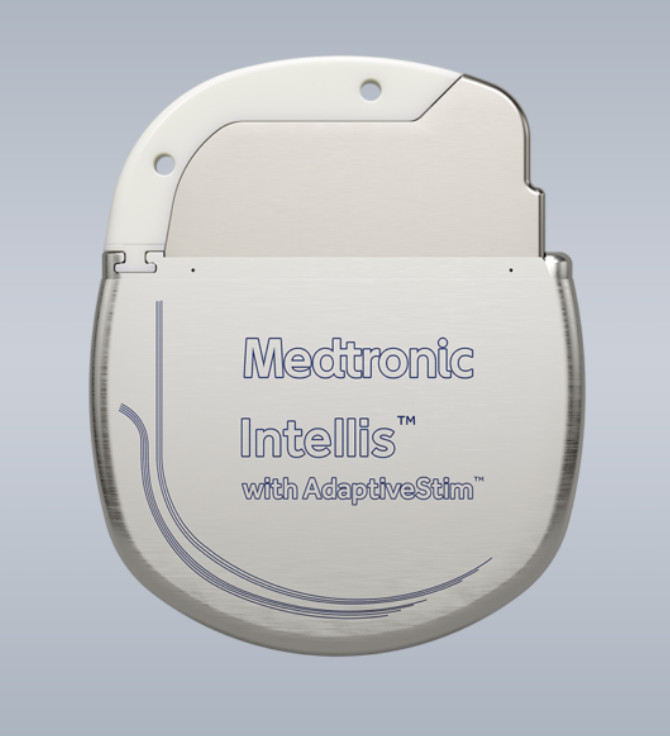
MTP-rådet rekommenderar regionerna att avstå från generell behandling med ryggmärgsstimulering eftersom det saknas klinisk evidens som visar på positiva hälsoeffekter. De tre produkter som dock kan användas när konventionell smärtbehandling inte hjälper är: Intellis från Medtronic, Proclaim från Abbot och Wavewriter från Boston Scientific. Totalt uttalar sig rådet om fem produkter. De övriga två produkterna som var med i urvalet, men som inte rekommenderas är Senza IPG från Nevro och Evoke från Saluda Medical. Anledningen är att företagen avstod från att medverka i utvärderingen.

– Ryggmärgsstimulering kan ha positiva effekter för enskilda patienter. Men när vi granskat det vetenskapliga underlaget, som för övrigt är ganska tunt, är de kliniska effekterna av ryggmärgsstimulering generellt sett osäkra. Och det är därför vi utformat rekommendation som vi gjort, säger Ulrica Fjärstedt, ordförande i MTP-rådet.


Bild: Medtronic

Studier efterlyses
Det saknas information om hur många som behandlas med ryggmärgsstimulering i Sverige. Patienter med långvarig smärta är en stor grupp. En mindre del av denna grupp har neuropatisk smärta, och bland dessa finns de som kan vara aktuella för behandling med ryggmärgsstimulering. Andelen patienter med neuropatisk smärta som behandlas med ryggmärgsstimulering är okänd. Kostnaderna för användningen av ryggmärgsstimulering är betydande och det varierar i vilken utsträckning regionerna använder metoden idag.

– Vi hoppas nu att rekommendationen blir ett stöd för regionerna och en vägledning vid val av behandlingsmetod för smärtlindring på det här området. Vi efterlyser också studier på området som kan visa på kliniska långtidseffekter jämfört med de behandlingsmetoder som vanligtvis används idag, säger Ulrica Fjärstedt.

Om ryggmärgsstimulering
Ryggmärgsstimulering innebär att en dosa, lik en pacemaker, implanteras under huden vid ryggslutet och via en elektrod skickar elektriska impulser in i ryggmärgen. Impulserna blockerar smärtsignalerna att nå hjärnan och på så sätt upplever patienten en smärtlindring. Stimulatorn kan programmeras och anpassas efter patientens behov.

Om MTP-rådet
MTP-rådet verkar för ordnat införande av medicinteknik och är regionernas samverkansmodell för medicinteknik inom Nationellt system för kunskapsstyrning, hälso- och sjukvård.